


Introduction
If you run a supplement brand, a pharmacy line, or a private-label vitamin business, you have probably stared at a packaging catalog at 2 a.m. wondering one simple thing: does the bottle actually matter, or is it just a container?
Fair question. A vitamin is a vitamin, right? Well… not exactly. Vitamins are surprisingly delicate little things. They react to light, moisture, oxygen, and even the material of the bottle they sit in for months before a customer finally opens the lid.
So today, let’s answer the question properly: Are vitamins in glass bottles better? We’ll look at the science of supplement stability, compare glass with plastic, talk about amber bottles, and walk through what vitamin brands should actually check before placing an order — whether you need one bottle or a full truck of pill bottles bulk.

The Short Answer: Are Vitamins in Glass Bottles Better?
Yes — in many cases, glass bottles can offer important advantages for vitamin and supplement products. But let’s be honest here: glass is not magic fairy dust for your formula.
Here’s what glass actually does well:
Glass is chemically stable. It doesn’t react with most supplement ingredients, so your formula stays exactly as you designed it.
Glass provides a strong barrier against moisture and gases, which are two of the biggest enemies of supplement shelf life.
Glass looks and feels premium. Customers notice. Retailers notice. Your brand benefits.
But — and this is important — packaging alone does not automatically make vitamins more effective. A vitamin doesn’t become “better” just because it sits in a pretty bottle. The real question is whether glass provides better protection for a specific formula.
Think of it like a good winter coat. It won’t make you a stronger person, but it will absolutely protect you from the weather. In the same way, the bottle, closure, liner, desiccant, and storage conditions must all work together as a team. One weak link — a bad cap, a missing seal, a humid warehouse — and even the best glass vitamin pill bottle can’t save the product inside.
Why Packaging Is So Important for Vitamins and Supplements
Vitamins Can Be Sensitive to Their Environment
Here’s something most consumers never think about: the vitamins in their cabinet are slowly degrading every single day. Heat, light, moisture, and oxygen all chip away at potency over time.
Some vitamins are tougher than others. But many common nutrients — vitamin C, B vitamins, fish oil, probiotics — are well known for being sensitive to their environment. Vitamin C, for example, is highly sensitive to both moisture and oxygen. Omega-3 fatty acids in softgels can oxidize, which affects both quality and taste. Probiotics are living organisms that die off faster in warm, humid conditions.
In other words, your supplement is on a countdown the moment it leaves the production line. Good vitamin bottle packaging simply slows that countdown down.
What Happens When Vitamins Are Not Properly Protected?
When vitamins aren’t properly protected, a few predictable things happen:
Potency drops. The label says 500 mg of vitamin C, but by month 12, the actual content may be significantly lower.
Odor and flavor change. Oxidized fish oil softgels, for instance, can develop that infamous “fishy burp” problem.
Tablets can soften or crumble when they absorb moisture from the air.
Color shifts — gummies may darken, powders may clump, and customers start asking questions.
The frustrating part? The customer blames the brand, not the bottle. That’s why choosing the right pill bottles is a business decision, not just a purchasing decision.
Packaging Is Part of Product Protection
Smart supplement brands treat packaging as part of the product itself — because it is. The bottle, the closure, the induction seal, the desiccant, the label: together they form a protective system. Change one part, and you change the performance of the whole system.
This is also why experienced supplement bottle manufacturers always ask about your formula before recommending a bottle. The right answer for a moisture-sensitive probiotic is very different from the right answer for a stable mineral tablet.
What Makes Glass Bottles Different from Plastic Bottles?
Glass Is Chemically Inert
Glass is made primarily from sand, soda ash, and limestone — simple, stable materials. It generally does not react with supplement ingredients, which means there’s very low risk of the bottle itself affecting the product inside.
This matters more than people realize. Some supplement ingredients can interact with certain plastics over long storage periods. With glass, packaging compatibility concerns are minimal, which is why glass is often the first choice for sensitive formulations — think probiotics, enzymes, herbal extracts, and liquid supplements.
Glass Provides a Strong Barrier
Glass is an excellent barrier against external moisture and gases. Plastic, depending on the type and thickness, allows small amounts of oxygen and water vapor to pass through over time. Glass, by comparison, is nearly airtight and watertight when properly sealed.
Why does barrier performance matter? Because shelf stability is a race between your product’s expiration date and the slow creep of humidity and oxygen through the packaging. A strong barrier helps your supplement stay potent closer to — and sometimes beyond — its labeled shelf life. For brands selling through retail channels, where products may sit on shelves for months, that protection has real commercial value.
Glass Does Not Absorb Odors Easily
Ever opened a plastic container that seemed to smell like… everything that was ever inside it? That’s because certain plastics can absorb and release odors over time.
Glass doesn’t really do that. For vitamins with strong natural smells — fish oil, garlic, turmeric, herbal blends — this is a genuine advantage. Your fish oil capsules smell like fish oil, not like fish oil plus whatever the warehouse smelled like. Customers appreciate this more than they can articulate.
Glass Offers a Premium and Clean Appearance
Glass feels solid, clean, and premium in the hand. It suggests quality, care, and a brand that takes itself seriously.
That’s exactly why many premium supplement brands choose glass supplement bottles — even when plastic would be cheaper. When two products sit side by side on a shelf and one is in glass, customers instinctively assign it a higher value. In a crowded supplement market, that perception is worth real money.

Glass Bottles and Vitamin Stability: Can Glass Help Protect Supplements?
Protection Against Moisture
Moisture is probably the number one cause of supplement degradation. Tablets soften and dissolve at the surface. Powders clump into bricks. Gummies get sticky and fuse together.
A properly sealed glass bottle, combined with a quality closure and a desiccant, offers excellent moisture protection. For brands that have experienced “clumpy powder” customer complaints, switching to glass capsule bottles with proper sealing is often the first fix.
Protection Against Oxygen
Oxygen triggers oxidation — the process behind rancid fish oil, degraded vitamin C, and off-flavors in herbal products. Because glass is nearly impermeable to gases, it dramatically limits how much oxygen reaches the product over time.
Pair a glass bottle with an induction seal liner, and you’ve built a genuinely strong oxygen defense. Many vitamin bottle manufacturers recommend exactly this combination for oxidation-sensitive formulas.
Protection Against Light
Light — especially UV light — can break down certain nutrients. Riboflavin (vitamin B2), for example, degrades noticeably under light exposure. Folic acid and vitamin A are also light-sensitive.
Glass gives you a unique advantage here that plastic struggles to match: you can choose the color of the bottle itself. And that brings us to one of the most common questions in vitamin bottle packaging…
Are Amber Glass Bottles Better for Vitamins?
Why Light Can Damage Some Nutrients
Ultraviolet and visible light carry energy that can break down molecular bonds in sensitive nutrients. The result is gradual potency loss — often invisible until a lab test reveals it. By then, the product has already been sitting on store shelves for months.
How Amber Glass Helps
Amber glass is specifically designed to filter out the wavelengths of light most harmful to light-sensitive contents. Depending on the glass thickness and color formulation, amber glass can block the vast majority of UV light — making it the standard choice for pharmacies, herbal products, and light-sensitive supplements.
If your formula includes vitamin A, B vitamins, probiotics, or herbal extracts, amber glass is usually the smart default. It’s not about looking old-school and scientific (though it does). It’s about physics.
When Clear Glass May Still Be a Good Choice
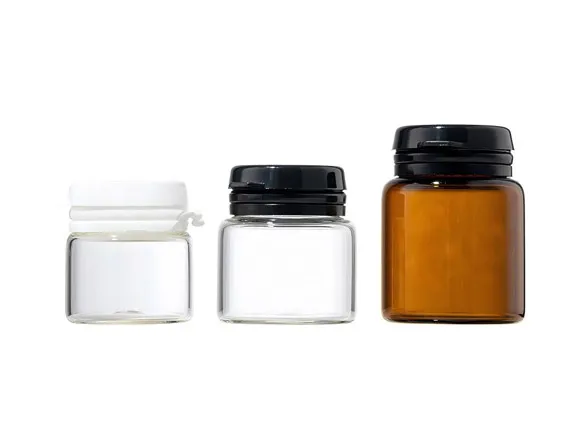
That said, clear glass has its place. If your product is light-stable — many mineral supplements, for instance — clear glass lets customers see the product, which builds trust and looks great for colorful gummies or clean white tablets. Clear glass plus a well-designed outer carton can work perfectly well.

What Types of Vitamins and Supplements Are Suitable for Glass Bottles?
Vitamin Tablets
Classic tablets are the bread and butter of the glass pill bottle world. They’re relatively stable, but they still benefit from moisture protection — especially effervescent and chewable tablets, which are highly humidity-sensitive. Glass with a tight closure and desiccant handles these beautifully.
Capsules and Softgels
Capsules and softgels are among the best candidates for glass. Gelatin and vegetarian capsules can absorb moisture and become brittle or sticky, while softgels are vulnerable to oxidation. Sealed glass capsule bottles keep both protected, and glass’s odor resistance is a bonus for fish oil and garlic softgels.
Herbal and Natural Supplements
Herbal products often contain complex plant compounds that degrade faster than synthetic vitamins — and many have strong natural odors. Glass’s inertness and odor resistance make it a natural fit here, which is why so many traditional herbal brands have always used glass.
Powdered Supplements
Protein powders, greens powders, and powdered vitamins hate moisture more than anything. While large-format powder products often use plastic tubs, smaller servings — think 100–300 g premium powders, collagen, or powdered vitamins — work very well in wide-mouth glass supplement containers.
Gummies and Other Specialty Supplements
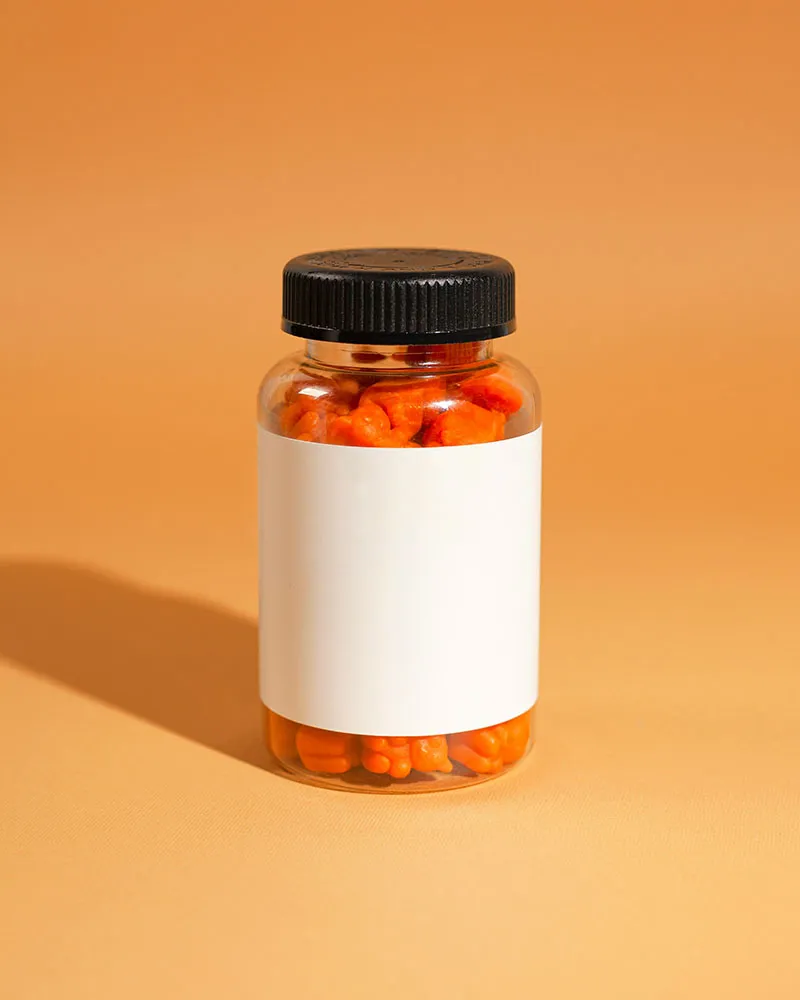
Gummies are moisture-sensitive, heat-sensitive, and increasingly sold as premium lifestyle products. Glass suits both the protection needs and the brand positioning. The same goes for specialty formats like sublingual tablets, lozenges, and effervescent products.
What Should Vitamin Brands Consider When Choosing a Glass Pill Bottle?
Bottle Size and Capacity
Match the bottle to your fill volume — not the other way around. Too much headspace means more air inside the bottle, which means more moisture and oxygen working against your product. A well-fitted bottle is a quiet but real quality advantage.
Bottle Color
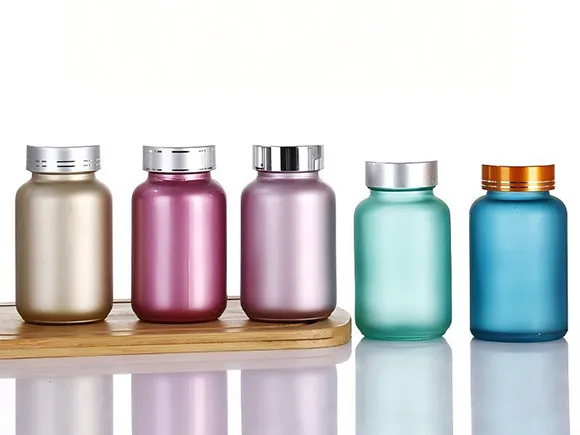
Amber for light-sensitive formulas, clear or frosted for stable products where visibility matters, cobalt blue or green for brand differentiation. Color is both a protection tool and a branding tool. Use both.
Neck Finish and Closure Compatibility
The neck finish (the threaded part of the bottle) must match your closure precisely — diameter, thread style, everything. A mismatch here means leaking, poor sealing, and unhappy customers. This is where working with experienced pill bottle manufacturers pays off, because they know which closures fit which finishes without drama.
Sealing Options
Induction seals, pressure-sensitive liners, heat-shrink bands — each serves a purpose. Induction seals are the gold standard for supplement freshness and tamper evidence. If your product is moisture- or oxygen-sensitive, don’t skip this conversation.
Moisture Control
A desiccant (usually a small silica gel canister or packet) inside the bottle is cheap insurance for moisture-sensitive products. Your bottle supplier should be able to recommend the right desiccant type and size for your fill volume. This is a small detail that prevents large problems.
Choosing a Reliable Glass Pill Bottle Supplier
Manufacturing Experience
Packaging is not the place for guesswork. Look for suppliers with real manufacturing experience — ideally years of it — who understand how bottles behave in filling lines, transit, and retail environments, not just how they look in a catalog.
Quality Control
Ask about inspection processes: dimensional checks, wall thickness consistency, defect rates, annealing quality. A reliable vitamin pill bottle manufacturer should be able to explain their QC process clearly, without vague answers.
Customization Capabilities
Whether it’s custom colors, embossing, silk screening, frosting, or special neck finishes — your bottle should be able to carry your brand, not just your product. Brands sourcing supplement containers wholesale especially benefit from suppliers who can handle both standard and custom runs.
Supply Capacity and Delivery Reliability
If you’re buying pill bottles wholesale, your supplier’s capacity is your capacity. Ask about lead times, MOQs, and what happens when you need an urgent reorder. A missed delivery can derail a product launch faster than almost anything else.
One-Stop Packaging Support
The best suppliers do more than ship glass. They help with closures, liners, desiccants, and decoration — so you’re not coordinating four vendors for one bottle. Fewer moving parts, fewer mistakes.
How Roetell Glass Supports Vitamin and Supplement Packaging
This is where we’d like to quietly introduce ourselves.
Roetell Glass is a glass packaging manufacturer with deep experience serving businesses across food, beverage, health, and beauty packaging sectors. For supplement brands, we offer a wide range of glass pill bottles — from classic amber tablet bottles to modern frosted capsule bottles — available as standard bottles for wholesale pill bottles orders, or fully customized with your colors, decoration, and branding.
We also support the details that make glass bottles actually work: matching neck finishes to closures, supplying induction seal liners, and recommending moisture control solutions for sensitive formulas. Whether you need a small custom run or pill bottles bulk for a national launch, we can scale with you.
Here’s our honest philosophy: a good packaging supplier should not simply sell you a bottle. They should help you avoid ordering the wrong bottle in the first place. The wrong bottle costs you money twice — once when you buy it, and again when your product underperforms. We’d rather help you get it right the first time.
So, Are Vitamins in Glass Bottles Better?
Let’s bring it home.
For many vitamin and supplement products — yes, glass bottles are better. They’re chemically inert, they provide an excellent barrier against moisture and oxygen, they resist odor transfer, they offer superior light protection (especially in amber), and they elevate how customers perceive your brand.
But glass is not automatically the right answer for every single product. The best choice depends on your formula, your shelf-life targets, your filling line, and your market positioning. A stable, budget-friendly multivitamin tablet may do just fine in plastic. A premium fish oil softgel or a light-sensitive probiotic? Glass is the clear winner.
So don’t ask “is glass better?” Ask the smarter question: “Is glass better for my product, sold to my customers, through my channels?”
Answer that honestly, partner with a supplier who understands both glass and supplements, and build a packaging system — bottle, closure, liner, desiccant — that protects your product all the way from your filling line to your customer’s cabinet.
Your vitamins work hard. The bottle that protects them should too.