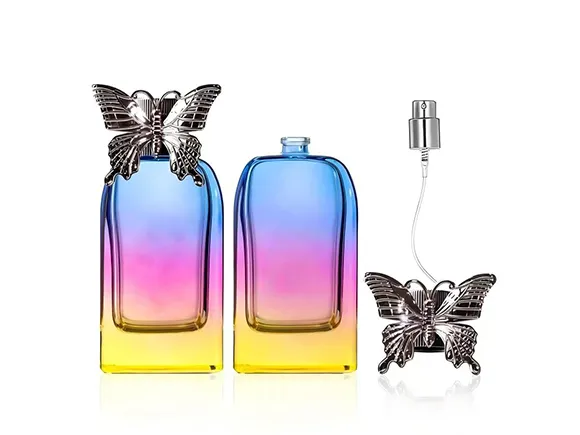
A perfume bottle is often the first thing a customer notices. Its weight, silhouette, color, and shine can communicate luxury before the first spray reaches the skin. However, a successful fragrance product is rarely built around the bottle alone.
Behind one finished perfume package, there may be a surprisingly long list of decisions: glass bottle development, cap matching, sample bottle packaging, retail boxes, fabric selection, printing, finishing, and the decorative sleeve or belly band placed around the box. Each item may look simple when viewed on its own. Together, they become a carefully connected packaging system.
For fragrance brands, this is where many projects become difficult. A bottle can look excellent in a design file but fail to match its cap. A sample vial may fit the liquid volume but not the box. A beautiful box may use a material that does not support the desired print or finishing effect. Even a small difference in color between a bottle, cap, box, and sleeve can make the final collection feel less premium.
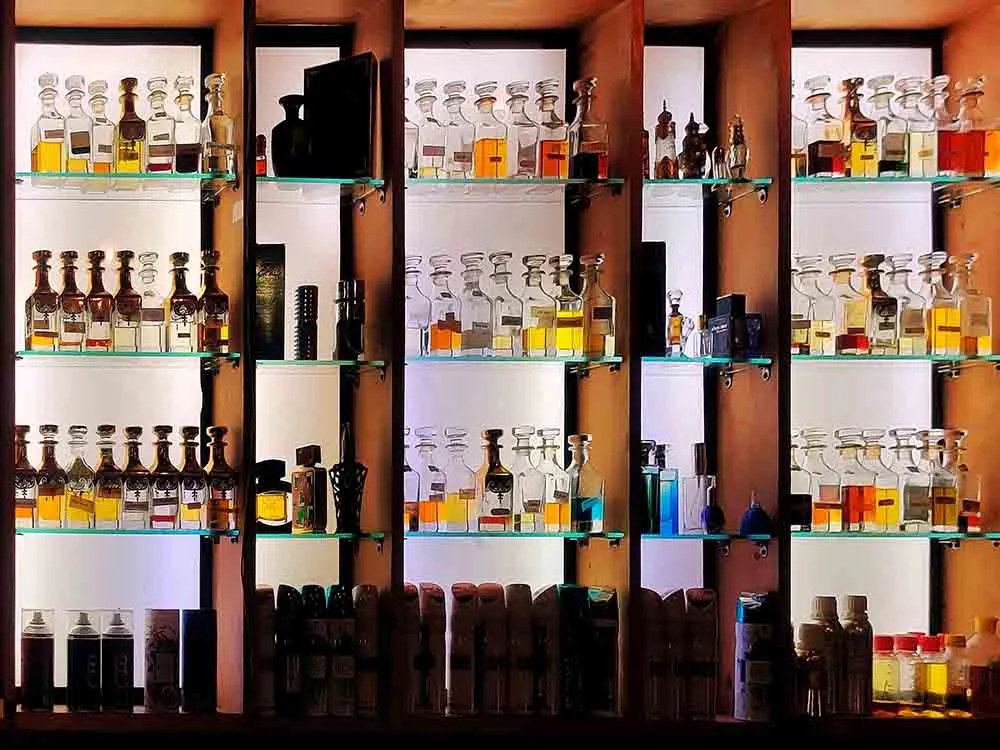
The real challenge is not simply finding a supplier for one component. It is making every element work together in style, timing, dimensions, and quality.
Roetell has supported fragrance brands with complex packaging requirements, helping coordinate different parts of a perfume project from glass bottles to final presentation packaging. This integrated approach gives brands a clearer path from an early idea to a finished product ready for the market.
A Perfume Product Is a Complete Packaging System, Not Just a Bottle
When people talk about perfume packaging, they often picture a luxury perfume bottle on a shelf. That image is understandable, but it shows only the final moment. The actual product may include a primary bottle, a cap, a pump or collar, a sample bottle, a sample cap, a roller ball, an inner tray, a retail box, a pouch, a fabric wrap, and a paper sleeve.
Each part has its own technical requirements. The glass bottle must hold the fragrance safely and provide a suitable surface for decoration. The cap must match the neck and create a stable, satisfying closing action. The sample bottle must be small enough for travel but still feel like part of the same fragrance family. The box must protect the product while also presenting it well when opened.
The complexity comes from the relationships between these parts.
A heavy glass bottle may require a stronger insert. A tall cap may affect the box height. A roller-ball sample may need a different inner structure from a spray vial. A soft pouch can protect a decorated bottle, but its fabric, color, and stitching must suit the overall brand identity. The decorative sleeve must be sized accurately and placed in a way that does not cover important information or damage the box surface.
In other words, a perfume project is not a collection of unrelated products. It is one connected experience. Customers may not consciously analyze every detail, but they notice when the parts feel balanced. They also notice when something feels mismatched. Packaging has a long memory: a loose cap or a crooked sleeve can be more memorable than the fragrance itself, and not in the way a brand hopes.
This is why complex projects need more than a supplier that can produce a good bottle. They need professional coordination across the whole packaging concept.
Coordinating Custom Glass Perfume Bottles with Brand Vision

Many fragrance projects begin with a broad creative direction rather than a fully defined technical drawing. A brand may say, “We want a luxury fragrance collection with a modern and premium feeling.” That sentence is useful, but it is not yet a production specification.
A capable custom perfume bottle manufacturer helps translate that vision into practical packaging decisions. The design direction may lead to questions such as:
•Should the bottle have a thick base for a substantial hand feel?
•Would clear, flint, frosted, or colored glass support the brand better?
•Should the shoulders be sharp and architectural or soft and rounded?
•Is the surface better suited to screen printing, coating, frosting, labeling, or hot stamping?
•How should the bottle structure work with the selected cap and pump?
•Can the final dimensions fit the planned retail box and inner tray?
These questions show why custom perfume bottles are about more than appearance. The bottle must express the brand while remaining suitable for production, filling, decoration, transport, and presentation.
Roetell’s role is not limited to producing glass perfume bottles from a drawing. Our team works to understand the connection between design requirements, production feasibility, and packaging compatibility. A bottle may be visually attractive, but it also needs to be stable, consistent, and suitable for the rest of the project.
For example, a luxury perfume bottle may require a particular wall thickness or base weight to achieve the desired feeling in the hand. A special surface treatment may affect how the bottle should be packed. A customized shape may require careful consideration of the cap, label area, carton, and shipping protection. Solving these points early helps reduce surprises later.
This type of cooperation is especially valuable for new fragrance collections, private-label programs, and brands developing a distinctive bottle for the first time. Instead of treating design and production as separate conversations, an integrated partner can help connect the two.
Creating a Consistent Identity Across Bottles, Caps, and Accessories
A high-end fragrance collection should look like a family, even when it contains several sizes or scents. The 100 ml bottle, 50 ml bottle, travel size, sample bottle, and discovery set should share recognizable visual language. That does not mean every item must be identical. It means the differences should feel intentional.
This is one area where many packaging projects become fragmented. One supplier provides the bottle. Another provides the cap. A third supplies samples or accessories. Each component may meet its own specification, but the complete set may not feel unified.
The bottle and cap must be considered together. Their proportions, colors, gloss levels, textures, and materials all contribute to the impression of quality. A clear glass bottle with a soft matte cap creates a different mood from a frosted bottle with a polished metal-looking cap. Neither option is automatically right or wrong. The important point is that the combination should support the brand story.
Samples need the same attention. A sample bottle is not merely a smaller version of the full-size package. Its neck, closure, decoration, and proportions may be different. A tiny bottle with an oversized cap can look playful, while a slim vial with a roller ball can feel practical and modern. The best choice depends on the fragrance positioning and the way the sample will be distributed.
For discovery sets, the sample bottle, sample cap, roller ball, tray, and outer box must work as one unit. The samples should be easy to remove, secure during shipping, and visually consistent with the full-size product. If the sample kit feels like an afterthought, it can weaken the customer’s first experience with the brand.
Roetell helps customers coordinate these details across customized perfume bottles and related accessories. The goal is not to force every project into one standard format. The goal is to help each component belong to the same product family.
Extending the Packaging Experience Beyond Glass Bottles
Packaging continues after the customer sees the bottle. In many cases, the opening experience is just as important as the product display.
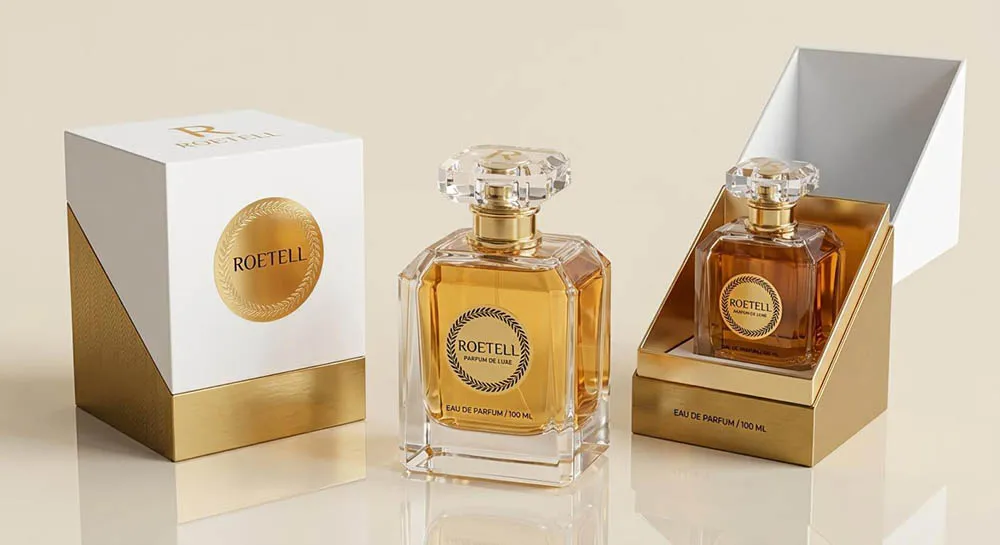
A retail box may contain an inner tray, a protective pouch, or a fabric wrap. The box can be finished with a paper sleeve or belly band that carries the fragrance name, collection information, or a seasonal message. These details can add structure to the brand story and make the product feel more complete.
The choice of box material matters. Paper texture, fabric grain, coating, foil, embossing, and printing all create different impressions. A smooth coated paper may suit a clean contemporary fragrance. A textured paper or fabric surface may support a more artisanal or heritage-inspired collection. A simple belly band can create a limited-edition look without changing the entire box design.
However, these elements should not be selected in isolation. The box color should relate to the bottle and cap. The pouch should protect the surface without introducing an unrelated texture. The sleeve should fit accurately and remain in place during handling. The inner tray should hold the product firmly without making the unboxing experience difficult.
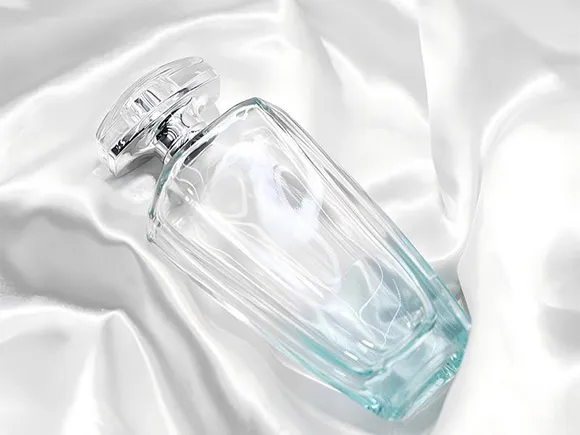
For a brand selling through boutiques, department stores, e-commerce, or fragrance wholesalers, packaging also has a practical job. It should protect the bottle during transportation and help the product stand out in a crowded retail environment. A beautiful package that arrives damaged is not a successful package.
This is where an experienced partner can add value. Roetell can help coordinate the relationship between the glass bottle, cap, sample set, retail box, pouch, fabric, and sleeve. The packaging remains creative, but it is also considered as a complete system.
Why Complex Perfume Packaging Projects Need Better Coordination
A brand can choose to source every item separately. This may appear flexible at the beginning, but it can create management problems later.
Supplier A may produce the bottle. Supplier B may provide the cap. Supplier C may make the box. Another company may handle the sample bottles, while a local printer produces the sleeves. Suddenly, the brand team is managing several sets of drawings, samples, timelines, quality standards, and shipping arrangements.
This approach can lead to:
•Inconsistent colors between components
•Delayed communication and repeated explanations
•Incompatible bottle and cap dimensions
•Box inserts that do not hold the product securely
•Sample packaging that does not match the main collection
•Extra coordination work and management costs
•Difficult quality control when an issue appears
These problems are not always caused by poor suppliers. They often happen because no one is responsible for the relationship between the parts.
A professional packaging partner can simplify communication and help coordinate specifications from the beginning. The brand has one central point for discussing the project, while the different components are considered together. This can make it easier to identify risks before mass production and to keep the visual direction consistent.
For buyers looking for perfume bottles wholesale, fragrance bottles wholesale, or cologne bottles wholesale, this coordination can be particularly useful. Wholesale volume does not remove the need for customization. In fact, higher quantities make early decisions more important because a small mistake can affect a large production run.
Better coordination also supports more reliable project timing. When bottle development, cap matching, sample packaging, and box production are planned together, the project team can see how one delay may affect the rest. That visibility helps brands make practical decisions instead of discovering problems at the packing stage.
Roetell’s Integrated Capability for Custom Fragrance Packaging
Roetell’s experience in glass manufacturing helps us understand one of the most important parts of perfume packaging: the relationship between every component.
Our work with custom perfume bottles begins with the product idea, but it does not have to end with the glass. Depending on the project, our team can support the coordination of bottle structure, glass appearance, surface decoration, caps, sample formats, roller-ball options, retail boxes, pouches, fabric materials, and paper sleeves.
This does not mean every project needs every item. Some brands may need a simple bottle and cap. Others may be developing a full collection with discovery samples, gift packaging, and several retail sizes. The level of support can match the project’s actual needs.
The advantage is having a partner that understands how the pieces influence one another. A change in bottle shape may affect the cap and box. A change in cap material may alter the package weight. A new decorative finish may require an adjustment to protective packaging. When these relationships are considered early, the final result is more likely to be both attractive and workable.
For brands, importers, distributors, and retailers, the result is more than a single product. It is a complete solution that connects visual identity, product protection, manufacturing requirements, and customer experience.
This integrated approach also suits businesses that want to build a recognizable fragrance range rather than launch one isolated item. Consistent proportions, coordinated colors, and related packaging details can help a collection look more professional across online listings, retail shelves, trade shows, and sales presentations.
As a factory with extensive glass production experience, Roetell understands that quality is not only about making a bottle without visible defects. It is also about helping the finished package feel intentional. The bottle should fit the cap. The sample should belong to the collection. The box should support the product. The final sleeve should look like part of the design, not an emergency decoration added at the last minute.
Conclusion
A successful perfume product is built from many details. The bottle may attract attention, but the complete packaging experience creates lasting brand value.
From custom perfume bottles and luxury perfume bottle concepts to caps, sample vials, roller balls, pouches, retail boxes, fabric materials, and belly bands, every part contributes to the customer’s impression. When those parts are designed and coordinated together, the result feels more stable, more professional, and more memorable.
For fragrance brands, glass perfume bottle manufacturers, retailers, wholesalers, and distributors, the right partner can make a complex project easier to manage. With experience in glass perfume bottles and integrated packaging support, Roetell helps fragrance brands turn ambitious packaging ideas into market-ready products.
Because in fragrance, the first impression may begin with a bottle. But it is the complete package that tells the story.