


If you’ve ever walked down the pickle aisle of a grocery store or browsed a farmer’s market, you’ve probably noticed one thing: pickles come in all kinds of jars. Small snack jars, family-size jars, and then — the real heavyweights — the big pickle jar. For food brands, pickling companies, and bulk buyers, choosing the right size isn’t just a packaging decision. It’s a business decision that affects production cost, shipping efficiency, shelf appeal, and even how customers perceive your brand.
Pickles are having a moment. The global pickled vegetables market has been growing steadily, driven by rising demand for fermented foods, probiotic-rich snacks, and bold flavors across North America, Europe, and Asia. That growth means more brands are entering the game, and more of them need reliable glass pickle jar suppliers who understand size, volume, and scalability.
In this guide, we’ll walk through everything you need to know about big pickle jar sizes — from what counts as “big,” to the most common capacities in wholesale, to how to pick the right one for your product line. We’ll also cover why glass remains the material of choice, and what to look for when sourcing large glass pickle jars in bulk.
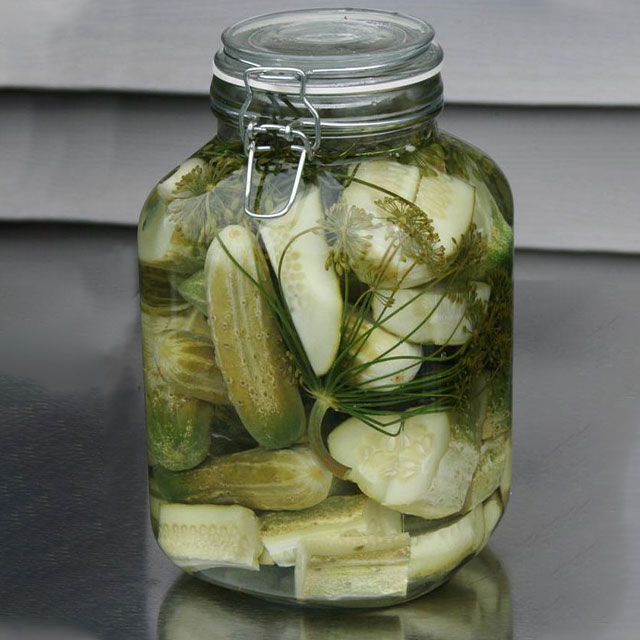
Why Choosing the Right Big Pickle Jar Size Matters
Here’s a simple truth: the wrong jar size costs money. Go too small, and your product looks underwhelming next to competitors on the shelf. Go too big, and you risk wasted product, higher shipping costs, and customers who can’t finish the jar before it goes soft in the fridge.
Size also shapes your pricing strategy. A 1 gallon glass pickle jar signals value and abundance — perfect for food service, delis, and family-size retail. A 32 oz pickle jar, on the other hand, fits the modern “premium but practical” profile that urban households love.
Beyond marketing, jar size affects:
Fill-line accuracy and brine ratios — too much headspace can shorten shelf life.
Case pack and pallet efficiency — bigger jars change how many units fit per box and per truck.
Retail shelf placement — gallon pickle jars often get their own dedicated display space, which can be an advantage or a logistics headache.
Customer repeat purchase behavior — households tend to repurchase familiar sizes, so consistency matters once you commit.
What Are Big Pickle Jars?
Definition of Big Pickle Jars
A big pickle jar generally refers to any glass pickling jar with a capacity above the standard retail size of 16 oz (about 470 ml). In industry terms, “large” usually starts at 32 oz and goes all the way up to 1 gallon and beyond. Capacity is typically measured in ounces (oz), milliliters (ml), liters (L), or gallons, depending on the market — the U.S. favors ounces and gallons, while European and Asian buyers usually work in milliliters and liters.
What separates a big pickle jar from a standard one isn’t just volume. It’s also the design: wider mouths, thicker glass walls, and lug or twist-off lids sized for heavy contents and long brine immersion.
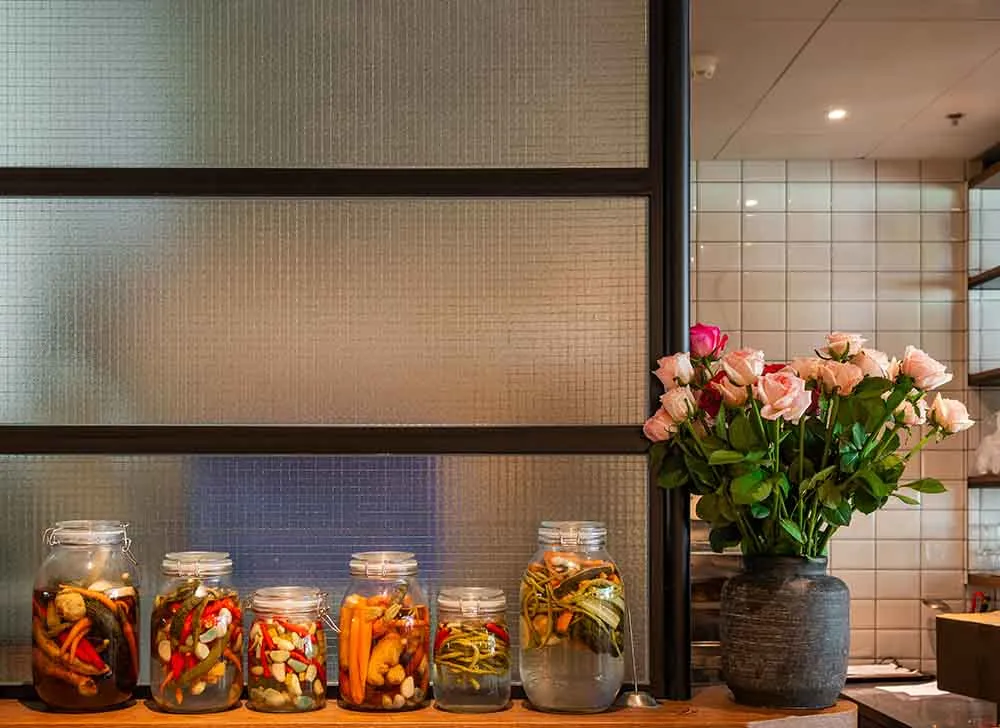
Common Applications of Large Pickle Jars
Large pickle jars show up in more places than you might think:
Retail food brands selling family-size or value-pack pickles
Delis, restaurants, and food service operations that serve pickles by the batch
Farmers’ markets and artisanal picklers offering seasonal or made-to-order products
Fermentation brands — kimchi, sauerkraut, and mixed vegetables often ship in large glass pickle jars because glass handles long fermentation better than plastic
Contract packagers and co-packers filling jars for multiple brands under one roof
Household canning enthusiasts who buy empty pickle jar in bulk for home use
Common Big Pickle Jar Sizes for Wholesale and Commercial Use
As mentioned, capacity is measured differently by market — oz and gallons in the U.S., ml and liters almost everywhere else. Below are the sizes that dominate wholesale orders year after year.
32 oz Big Pickle Jar
The 32 oz pickle jar is the workhorse of the mid-size category. It holds roughly 950 ml, making it big enough for a family but small enough for standard retail shelves. It’s the go-to size for brands targeting everyday grocery shoppers, and it’s one of the most consistently high-volume items for any pickle glass jar manufacturer. Its compact footprint also means efficient palletization — you can fit significantly more 32 oz units per truck than gallon sizes.
64 oz Pickle Jar
The 64 oz (about 1.9 L) jar sits comfortably between retail and food service. It’s popular with warehouse clubs, bulk grocery formats, and brands that want to offer a “bigger value” option without jumping all the way to a gallon. For many pickling brands, the 64 oz is the second SKU in their lineup after the 32 oz.
100 oz Big Pickle Jar
The 100 oz (roughly 3 L) option is a less common but growing size, especially for specialty and ethnic food brands. It offers a middle ground for buyers who find the gallon slightly too large but want more than 64 oz. Because it’s less standardized, brands ordering this size often work directly with manufacturers on custom mold and lid specifications.
1 Gallon Glass Pickle Jar
The 1 gallon glass pickle jar (128 oz / 3.78 L) is the undisputed king of the large pickling jar category. Gallon pickle jars remain hugely popular in the food industry for a few practical reasons:
Value perception — customers instinctively associate bigger jars with better value, especially for food service and institutional buyers.
Fermentation-friendly volume — a gallon is the classic home-fermentation size, so brands selling live-cultured pickles align naturally with this capacity.
Reusability — empty gallon jars are prized by consumers for storage, pantry organization, and DIY projects, which adds afterlife value to your packaging.
Another reason the gallon dominates: the wide-mouth design. Wide mouths make filling faster on production lines, reduce spillage, and let customers easily remove whole pickles, spears, or large vegetable pieces without breaking them. For brands selling whole pickles or long spears, the wide-mouth gallon jar is almost non-negotiable.

How to Choose the Right Big Pickle Jar Size for Your Brand
Consider Your Product Quantity and Sales Channel
Start with the product itself. How much does one serving weigh? How long does a customer take to finish a jar? A deli buying gallon pickle jars for back-of-house use has completely different needs than a boutique brand selling gift-worthy 32 oz jars at a farmers’ market.
Match size to channel:
Supermarkets and grocery → 32 oz is the sweet spot; 64 oz for value lines
Warehouse clubs → 64 oz to 1 gallon
Food service and restaurants → 1 gallon glass pickle jars
E-commerce and direct-to-consumer → 32 oz; large glass pickle jars ship poorly individually due to weight
Evaluate Filling and Production Requirements
Your jar size has to work with your filling line, not against it. Check the neck finish and lid type — standard lug finishes (like 70mm, 86mm, or 110mm) are easier to source and cheaper than custom ones. Also consider the fill temperature: hot-fill and pasteurization processes put stress on glass, so wall thickness and jar shape matter. Always run compatibility tests with your brine and process before committing to a large order of glass pickling jars.
Think About Storage and Shipping Costs
Glass is heavy — a full 1 gallon jar can weigh 3 kg or more. That weight multiplies fast at scale. A pallet of gallon jars holds far fewer sellable units than a pallet of 32 oz jars, which affects freight cost per unit. If your distribution covers long distances, many brands find that 32 oz or 64 oz jars strike the best balance between shelf presence and logistics cost. Also factor in warehouse stacking strength: quality jars with reinforced shoulders stack higher and safer.
Why Glass Is the Preferred Material for Big Pickle Jars

Better Food Safety and Product Protection
Glass is non-porous and inert. It doesn’t leach chemicals, doesn’t absorb odors, and creates a near-perfect oxygen barrier when paired with a quality lid — critical for pickles, where oxidation and contamination can ruin a batch. For acidic, vinegar-based brines, glass is simply the safest long-term container. That’s why almost every serious pickle glass jar manufacturer focuses on glass rather than plastic alternatives.
Excellent Product Visibility
Pickles sell with the eyes. Bright green dills, spears arranged just so, whole vegetables suspended in golden brine — glass shows all of it. Product visibility is a genuine marketing advantage: shoppers can see exactly what they’re getting, and brands can skip opaque labels in favor of clean, minimal designs that let the product shine.
Sustainable Packaging Advantages
Glass is 100% recyclable and can be recycled endlessly without quality loss. With consumer and regulatory pressure on single-use plastics growing every year — extended producer responsibility laws are expanding across the EU, U.S. states, and beyond — glass packaging positions your brand ahead of the curve. Many retailers now actively prefer or require recyclable packaging for shelf placement, making a glass pickle jar a strategic choice, not just an aesthetic one.
Wholesale Big Pickle Jar Supply: What Bulk Buyers Should Know
MOQ and Production Capability
Minimum order quantities for glass packaging typically start around 10,000–20,000 units per size for standard designs, though some manufacturers offer lower MOQs for stock molds. Before signing with a supplier, verify:
Actual production capacity and lead times (glass furnaces run continuously, but mold changes and color runs add time)
Consistency across batches — wall thickness, finish dimensions, and clarity should be uniform
Quality certifications — ISO 9001, food-contact compliance (FDA / EU food safety standards)
Customization Options for Big Pickle Jars
Wholesale doesn’t mean one-size-fits-all. Common customization options include:
Custom embossing — your logo molded directly into the glass
Color options — flint (clear), amber, green, or frosted finishes
Lid variety — metal lug lids, plastic twist-off, two-piece canning lids; pickle jars with lids should always be sourced as a matched set to guarantee seal integrity
Label-friendly shapes — smooth panels for applied labels or silk screening
Custom molds require higher MOQs and tooling investment, but for established brands, embossed glass builds shelf identity that competitors can’t copy.
Where To Buy Wholesale Big Pickle Jars?
Channels
Direct from manufacturers — best pricing and customization control; ideal for established brands with volume.
Packaging distributors and wholesalers — convenient for mixed orders and smaller quantities, but with a markup.
Online B2B platforms — Alibaba and similar marketplaces offer quick comparisons, though quality varies widely; always request samples.
Regional packaging trade shows — useful for seeing jar quality in person and meeting suppliers face to face.
Cooperate With Roetell Glass
Whichever channel you choose, the supplier behind the jar matters as much as the jar itself. Roetell Glass, for example, has built its reputation working with food brands that need large pickle jar volumes without cutting corners — offering sizes from 32 oz pickle jars up to 1 gallon glass pickle jars, with customization options ranging from embossing to lid matching. The advantage of working with an experienced manufacturer is consistency: every empty pickle jar that arrives at your filling line should be identical to the last, and a partner that understands pickling and fermentation requirements helps you avoid costly surprises after production begins.
Conclusion
Choosing the right big pickle jar size comes down to matching capacity with your product, your channel, and your logistics reality. The 32 oz big pickle jar wins for retail reach. The 64 oz pickle jar bridges retail and food service. And the 1 gallon glass pickle jar remains the industry’s volume king — big, bold, and fermentation-approved. Whatever size you land on, glass delivers the safety, visibility, and sustainability that modern food brands need.
If you’re ready to scale your packaging, start with a clear spec sheet, request samples, and partner with a pickle glass jar manufacturer that treats quality as non-negotiable. Your pickles deserve a jar as good as what’s inside it.
