


A food jar does more than hold a product. On a crowded retail shelf, its shape can help a brand attract attention before customers read the label. A familiar form can communicate reliability, while a distinctive design can make a product easier to recognize and remember.
This is one reason food brands are exploring custom glass food jars instead of relying only on standard round containers. A unique shape can strengthen brand identity, create a more memorable product experience, and provide additional space for labels or decoration.
However, custom glass packaging is not as simple as turning a creative drawing into a mold. A shape that looks straightforward on screen can become challenging when formed from hot glass. Curves, flat surfaces, wall thickness, glass distribution, and cooling behavior all need to work together.
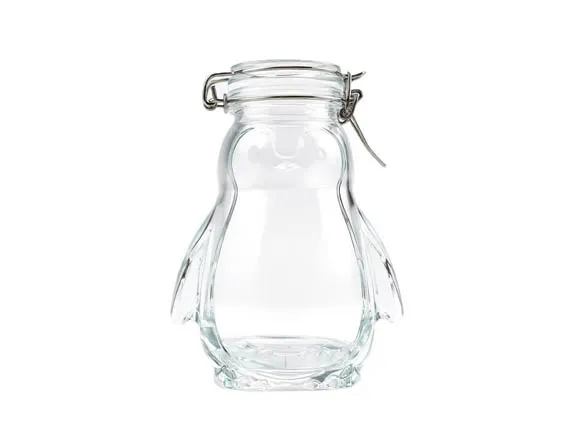
A recent project for a nut butter brand demonstrated this clearly. The customer wanted a cute bear-shaped jar with a rounded body and one special feature: a completely flat belly. The flat area would provide a useful surface for printing, labeling, and other branding elements.
The idea was charming. The production challenge was considerably less cuddly.
During development, the belly area could become either too thin or too thick. Roetell’s product development team worked with mold engineers and the mold manufacturer through repeated testing, sampling, and adjustments. The goal was to create a jar that kept the intended bear shape while remaining suitable for consistent production.
This project shows an important principle of custom glass packaging: a design is not truly successful until it works not only as a drawing, but also as a manufacturable product.
Why Unique Glass Jar Designs Matter to Food Brands
Packaging Is Part of the Product Experience
For food brands, packaging is often the first physical interaction a customer has with a product. The shape of a jar, the feel of the glass, the lid, and the decoration can all influence how the product is perceived.
This is particularly relevant to nut butter, jam, honey, sauces, spreads, and specialty foods. Many products within these categories have similar colors and textures. A distinctive package can therefore give a brand another way to stand out.
For example, a custom container can communicate different brand qualities:
Playful and family-friendly
Premium and sophisticated
Natural and traditional
Handmade and artisanal
Modern and distinctive
This is where glass jars for food packaging can offer useful design flexibility. Glass provides a clean surface for labels, printing, frosting, embossing, and other decoration methods, depending on the product and manufacturing requirements.
The container can even become part of the brand story. Customers may not remember every detail on a label, but they may remember “the bear jar” or another distinctive package.
Why Character-Shaped Food Jars Are Attractive
Animal-shaped packaging can give food products a friendly and recognizable appearance. Bear-shaped jars, for example, can work well for nut butter, honey, cookies, children’s food, gift products, and other products that benefit from a warm visual identity.
A character-shaped container can also remain useful after the original food has been consumed. This may encourage consumers to reuse the jar and keep the brand’s packaging in their home.
But the attractive appearance hides a more complicated manufacturing process.
A character jar may contain rounded shoulders, curved sides, narrow sections, ears, feet, or other decorative details. Each section influences how molten glass moves inside the mold. A change made for visual reasons can also affect wall thickness, glass distribution, cooling, and dimensional stability.
In other words, a character-shaped jar is not simply a standard jar wearing a costume. It is a new glass-forming challenge.
The Special Requirement: A Bear Jar with a Flat Belly
A Simple Design Idea with a Difficult Manufacturing Requirement
The customer’s concept was easy to understand. They wanted a cute bear-shaped jar for nut butter. The body needed to remain rounded and full so that the bear looked friendly, but the belly needed to be flat enough for a clear decoration area.
This created the central engineering challenge.
Most rounded character jars have curved surfaces across the front. Labels and printed designs must follow those curves, which can limit the available branding area. A larger flat belly would provide a more stable surface for artwork and make the bear’s front-facing appearance more recognizable.
However, creating a flat section within an otherwise rounded body changes the way glass flows during forming.
The project therefore required coordination between the product drawing, glass weight distribution, mold structure, forming process, and cooling behavior.
Why the Flat Belly Was Difficult to Produce
When hot glass enters a mold, it does not distribute itself evenly across every section automatically. Glass flow can be influenced by temperature, pressure, mold geometry, timing, and the distribution of glass weight.
A rounded surface can provide a relatively natural path for the glass. A large flat area introduces a different forming requirement.
The team needed to balance several factors:
The belly needed to remain visibly flat.
The surrounding body needed to retain its bear-like curves.
The glass wall needed suitable thickness for normal handling.
The jar needed to maintain its shape during cooling.
The finished appearance needed to remain consistent from different viewing angles.
Two problems became particularly important during development.
Problem 1: The Belly Became Too Thin
If insufficient glass reached the flat belly, that section could become too thin. For a food container, this can create concerns during filling, packing, transportation, and everyday handling.
The problem is also not always obvious from a quick visual inspection. A sample may look acceptable while still requiring closer examination of wall thickness and the transition between the flat and curved sections.
For food packaging manufacturers and buyers, this illustrates why custom glass development needs to consider the complete supply chain. The jar may travel through filling lines, cartons, warehouses, distribution centers, retail environments, and finally into the consumer’s hands.
The package needs to be designed for the entire journey rather than only for its appearance.
Problem 2: The Belly Became Too Thick
The opposite problem was also possible. If too much glass accumulated in the belly, the surface could become uneven and the jar could become heavier in one area.
Uneven glass distribution can also make cooling more difficult to control. Thicker sections may retain heat longer than thinner sections, increasing the difficulty of maintaining the intended shape.
For the bear jar, excessive material in the belly could change the character’s proportions. The front might bulge, the sides could shift, or the original design could lose its visual balance.
The challenge was therefore not simply to make the belly flat. It was to make the belly flat with the right amount of glass in the right places.
How Roetell Solved the Glass Forming Challenge
Collaboration with Mold Engineers
The development team approached the issue as a combined product and manufacturing problem. Product development engineers, glass-forming specialists, mold engineers, and the mold manufacturer worked together to review the design.
The team examined how the flat belly connected with the rounded body and considered the likely glass distribution and cooling behavior.
Instead of asking only whether the jar looked like a bear, they also considered:
Where would the glass flow first?
Which areas could receive too much material?
Which areas needed additional support?
How would the flat surface affect the surrounding curves?
Would the jar retain its shape after cooling?
Could the design be repeated consistently during production?
This broader approach helped turn a visual design problem into a practical manufacturing solution.

Repeated Sampling and Improvement
Custom glass packaging rarely reaches the final version in one attempt. A typical development process can involve:
- Reviewing the original product drawing.
- Adjusting glass weight distribution.
- Refining the mold design.
- Producing trial samples.
- Checking shape, thickness, and appearance.
- Comparing samples with customer requirements.
- Making further adjustments.
A sample may look correct from the front but reveal an issue from the side. Another sample may have the right overall shape but an uneven transition between the flat belly and the curved body.
This is why physical sampling remains important in custom glass development. A digital drawing can show what the designer wants. A real sample shows how the glass actually behaves.
The Roetell team continued testing until the design achieved a better balance between appearance and production requirements.
Balancing Design and Production Reliability
The final solution involved improving glass distribution and refining the mold details so the bear could maintain its rounded appearance while providing a more useful flat front surface.
This balance is central to successful custom packaging.
A beautiful design is valuable, but it also needs to be practical to manufacture. At the same time, a production-friendly design should not lose the visual feature that makes it attractive.
For this project, the key goals were:
Design creativity: Keep the bear shape distinctive and recognizable.
Product performance: Develop suitable glass distribution for normal filling, handling, and transportation.
Production consistency: Create a design that can move beyond sampling toward repeatable manufacturing.
What This Project Shows About Glass Jar Manufacturing
Custom Glass Jars Require More Than a New Shape
A custom jar begins with a design, but the final product depends on many connected factors. Mold engineering, glass weight, wall thickness, forming conditions, cooling behavior, inspection, and production control all influence the result.
This applies to many products, from character-shaped nut butter containers to jam jars and large glass jars for food storage.
The closure also needs to be considered early. Brands looking for glass jars with lids for food storage should evaluate the jar and lid as one packaging system.
The mouth finish, sealing method, filling process, headspace, lid compatibility, and decoration area may all affect the final packaging solution.
For B2B buyers, this is important because a jar is not purchased only as an individual piece of glass. It needs to work with filling equipment, closures, cartons, pallets, transportation, and the brand’s overall packaging system.
Experience Matters in Unusual Packaging Projects
Manufacturing experience does not mean using the same solution for every project. It means having a stronger foundation for identifying potential problems and testing practical solutions.
With more than 40 years of experience in glass manufacturing, Roetell has developed packaging for food, beverages, cosmetics, and other applications. Different products naturally have different requirements.
A nut butter jar may prioritize a wide mouth and convenient filling. A sauce jar may require different closure and filling considerations. A premium food product may place greater emphasis on shape, decoration, and shelf presentation.
The bear-shaped jar demonstrates another side of manufacturing experience: the ability to work through an unusual forming challenge instead of forcing a complex design into a standard production approach.
From Concept Drawing to Mass Production
For brands, retailers, wholesalers, and procurement teams, custom packaging development should begin with more than an attractive drawing.
A professional manufacturer can help review the concept, identify potential forming risks, develop the mold, produce samples, inspect the results, and prepare the design for repeatable production.
Early technical communication can also help identify which features are essential to the brand and which details may need adjustment for manufacturing efficiency.
This matters because custom packaging can influence more than appearance. It can affect:
Mold development
Sampling time
Production consistency
Packaging performance
Storage requirements
Shipping efficiency
Decoration options
Overall product presentation
For businesses sourcing glass jars for food, these considerations can be just as important as the initial shape.
A successful custom jar should therefore connect creative design with realistic production requirements.
Why Food Brands Choose Custom Glass Jars

Glass Packaging Can Strengthen Brand Presentation
Glass has a clean and substantial appearance that can support premium food positioning. Its transparent surface can also allow consumers to see the product, which may be useful for jams, sauces, honey, spreads, and other visually appealing foods.
Custom glass food jars can take this a step further by creating a distinctive shape that customers can associate with a specific product or brand.
A recognizable jar can be especially useful for premium product lines, gift packaging, seasonal launches, children’s products, and limited editions.
Design and Decoration Should Work Together
The shape of a jar should be considered together with how the brand plans to decorate it.
Labels, printing, embossing, and other decoration methods can require suitable surfaces. In the bear project, the flat belly was not simply a visual detail. It was created to provide a more practical front-facing area for branding.
The same principle applies to food storage glass jars. A jar should look good, but it should also provide a useful surface for the information and decoration the brand needs.
For some products, the ability to reuse the container can also add value. Glass jars for food storage may continue to serve consumers after the original product has been consumed, depending on the jar and closure design.
Conclusion: Turning a Creative Idea into a Reliable Glass Jar
The development of this bear-shaped nut butter jar started with a simple request: create a rounded bear body with a completely flat belly for decoration.
In practice, that small design feature created a significant glass-forming challenge. The belly could become too thin, or too much glass could accumulate in the same area. Both outcomes could affect the appearance and production performance of the jar.
Roetell’s development team worked with mold engineers and the mold manufacturer through repeated testing, sampling, inspection, and adjustment. By improving glass distribution and refining the mold design, the team achieved a better balance between the bear’s friendly appearance and practical manufacturing requirements.
The project demonstrates why custom food packaging requires cooperation between design, engineering, tooling, production, and quality control.
For brands sourcing glass jars for food packaging, the right manufacturer should be able to look beyond the drawing and understand how the design will behave in real production.
Whether the requirement is character-shaped glass food jars or another custom food container, successful packaging starts when creativity and manufacturing experience work together.
A good idea may begin on a screen. A dependable glass jar has to work in the real world.