


Introduction
Picture a hospital pharmacy preparing an infusion product for a busy ward. The bottle may be small, but its job is important. It needs to protect the solution during filling, storage, transport, and use while working smoothly with the closure and administration system.
In other words, the package is more than a container. It is part of the medicine’s safety system.
Infusion solutions can be sensitive to light, oxygen, moisture, temperature, and interaction with the container. This is why pharmaceutical packaging requires careful material selection. Plastic offers useful benefits such as low weight and flexibility, but glass medicine bottles remain widely used for infusion products because of their chemical stability, barrier performance, and reliable processing characteristics.
For pharmaceutical brands, distributors, wholesalers, and glass medicine bottles manufacturers, understanding these advantages is important when selecting the right packaging.
Introduction
Why Infusion Products Have Strict Packaging Requirements
Why Glass Medicine Bottles Are Still Widely Used for Infusion Products
Glass vs Plastic Infusion Packaging: Why Both Have Their Place
Different Types of Glass Used for Infusion and Pharmaceutical Bottles
What Pharmaceutical Buyers Should Consider When Sourcing Glass Medicine Bottles
Why Choosing the Right Glass Medicine Bottle Manufacturer Matters
Conclusion: Glass Remains a Trusted Choice for Infusion Packaging
Why Infusion Products Have Strict Packaging Requirements
Infusion Solutions Directly Depend on Packaging Safety
Infusion products are administered directly into the body, often through intravenous use. This leaves little room for packaging problems.
The solution needs to remain within its required specifications from filling to the point of use. Packaging therefore needs to protect the product without introducing unwanted particles, substances, or changes in appearance.
Pharmaceutical companies may assess factors such as extractables and leachables, hydrolytic resistance, light protection, gas permeability, dimensional accuracy, closure performance, and sterilization compatibility.
The exact requirements depend on the formulation and market, but the basic principle remains the same: the medicine and its packaging must work together.
A package that looks perfect on the production line may still cause problems if it interacts with the formulation over time. This is particularly important for products with sensitive pH levels, biological ingredients, preservatives, or active compounds that are easily affected by their surroundings.
The Container Is More Than Just a Bottle
A medicine bottle has several jobs at once. It must contain the liquid, provide a protective barrier, support a secure closure, withstand normal handling, and provide a suitable surface for labeling and inspection.
During distribution, it may face vibration, stacking pressure, temperature changes, and repeated handling.
For infusion packaging, the bottle also needs to fit the filling and sterilization process. Neck dimensions must match the selected stopper, seal, or port. The bottle must have sufficient strength for normal handling, while internal cleanliness needs to be properly controlled.
Even the bottle shape can affect filling speed, labeling, pallet efficiency, and breakage risk.
That is why professional buyers do not evaluate only the unit price. They evaluate the complete packaging system. A low-cost medication bottle that creates filling delays or closure problems is not necessarily a low-cost solution.
Why Glass Medicine Bottles Are Still Widely Used for Infusion Products
Excellent Chemical Stability and Low Reactivity
One of the main reasons pharmaceutical companies continue to use glass is its chemical stability.
High-quality pharmaceutical glass is designed to resist interaction with many drug formulations. Type I borosilicate glass, in particular, is known for strong hydrolytic resistance and low chemical reactivity.
This matters because the medicine should remain the main character in the package. When a formulation is stored for months or years, low reactivity can help maintain its intended quality and reduce compatibility concerns.
Glass is also well established in pharmaceutical packaging standards. Depending on the market, buyers may refer to USP <660>, Ph. Eur. standards, or other national requirements. The specific compliance route should always be confirmed for the individual product.
Strong Barrier Performance Against External Factors
Glass provides a strong barrier against moisture, oxygen, and many external contaminants. Under normal packaging conditions, it is essentially impermeable to gases, which can be useful for oxygen-sensitive infusion solutions.
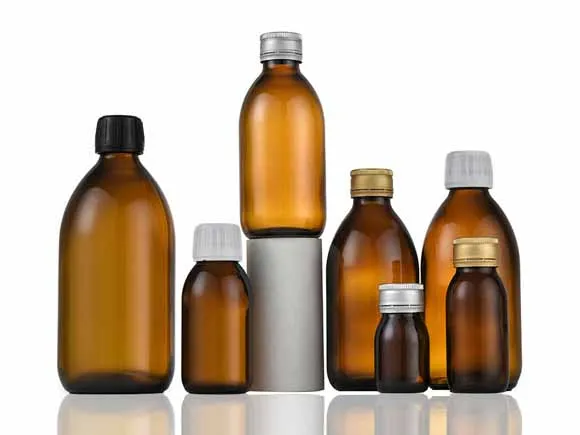
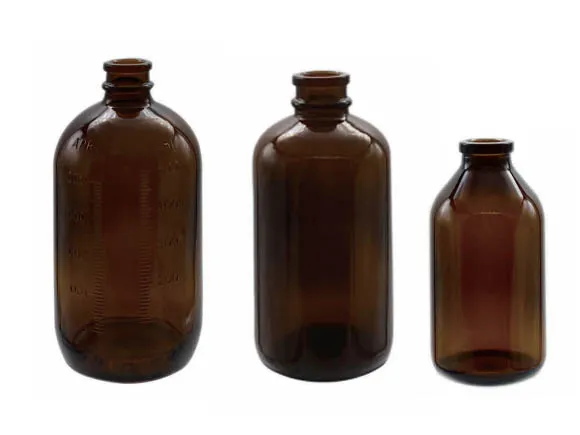
Light protection is another consideration. Clear glass bottles for medicine allow easy product inspection, while amber glass bottles can reduce exposure to ultraviolet and visible light for light-sensitive formulations.
Amber glass medicine bottles are therefore commonly used when additional light protection is required. However, the appropriate protection level should be confirmed through product stability testing rather than assumed from the bottle color alone.
Reliable Performance During Sterilization Processes
Infusion packaging often needs to withstand demanding processing conditions. Glass can tolerate many common sterilization and depyrogenation processes when the correct glass type, bottle design, and process parameters are selected.
However, not every glass medicine bottle is suitable for every sterilization cycle. Thermal shock, rapid temperature changes, and poor handling can still cause breakage.
Bottle wall thickness, bottom design, annealing quality, and inspection standards all contribute to reliable performance. When properly manufactured and processed, glass can fit well into established pharmaceutical sterilization workflows.
Price: Looking Beyond the Unit Cost
Glass is not always the cheapest material when comparing the purchase price of one empty bottle. It is heavier than many plastic alternatives, so transportation and breakage prevention can add costs.
However, pharmaceutical buyers should look beyond the unit price and consider the total cost, including shipping, storage, filling efficiency, breakage, inspection, validation, and supply continuity.
A stable glass medicine bottle may help reduce hidden costs related to rejected batches, compatibility investigations, product complaints, or packaging changes.
Sometimes glass costs more at the loading dock and less in the quality department. The spreadsheet may not laugh, but it can still tell an interesting story.
Glass vs Plastic Infusion Packaging: Why Both Have Their Place
A professional packaging decision should not treat glass and plastic as heroes and villains. Both materials have important roles, and the right choice depends on the formulation, delivery method, processing conditions, market, and logistics strategy.
Advantages of Glass Packaging
Glass offers low permeability, strong chemical stability, high transparency options, and good resistance to many sterilization processes.
It also has a long history in pharmaceutical packaging, which can help companies work with established testing methods and quality expectations.
Clear glass medicine bottles allow visual inspection for discoloration, particles, or precipitation. Amber formats can provide additional light protection where required.
Glass also offers predictable dimensions and a stable surface for closures and labels when manufactured under controlled conditions.
Why Some Brands Still Choose Plastic Packaging
Plastic can be an excellent option for selected infusion products.
It is lightweight, which may reduce transportation weight and make handling easier for healthcare workers. Plastic containers can also provide impact resistance, flexible designs, and convenient formats for certain delivery systems.
Some infusion products are supplied in flexible bags or polymer bottles because the format fits their clinical use, storage conditions, or administration requirements.
Plastic selection still requires careful evaluation. Permeability, extractables, leachables, stress cracking, sterilization compatibility, and formulation interaction all need to be considered.
The fact that a container is plastic does not make it simple, just as the fact that a container is glass does not make it automatically suitable.
Why Many Pharmaceutical Companies Keep Glass as a Preferred Choice
Many companies retain glass because it offers a familiar balance of protection and performance.
Existing filling lines, validated processes, supplier relationships, and regulatory documentation may already be built around glass. Changing materials can require new compatibility work, stability studies, equipment adjustments, and regulatory evaluation.
For products with demanding chemical or light-protection requirements, glass may also provide useful technical advantages.
As a result, some pharmaceutical companies use a mixed strategy: glass bottles for medicine where strong barrier properties are important, and plastic formats where light weight and flexibility provide greater value.
Different Types of Glass Used for Infusion and Pharmaceutical Bottles
Type I Borosilicate Glass for High-Requirement Applications
Type I borosilicate glass is often selected for demanding pharmaceutical applications because of its low alkali release and strong hydrolytic resistance.
It can be suitable for sensitive formulations that require a high level of chemical stability.
Buyers should request documentation for the applicable glass classification and confirm that the bottle is suitable for the intended formulation and process.
The label “pharmaceutical glass” should be supported by meaningful quality records, not just a confident font on a brochure.

Amber Glass Medicine Bottles for Light-Sensitive Products
Amber glass medicine bottles are designed to reduce light transmission. They are commonly used when exposure to light may affect a product’s potency, color, or stability.
The required amber shade and protection level can vary, so testing should match the product’s stability profile.
Amber bottles are also used for oral medicines, pharmaceutical ingredients, and laboratory products. For infusion packaging, the final choice depends on whether the required light protection can be balanced with visual inspection needs.
Clear Glass Bottles for Product Visibility
Clear glass medicine bottles offer excellent product visibility.
This helps quality-control teams and healthcare professionals inspect the solution for particles, color changes, precipitation, or other visible issues.
Clear glass is often preferred when the formulation is not light-sensitive and visual examination is an important part of use.
Whether a buyer needs small medicine bottles or larger infusion containers, the bottle should be matched with the correct neck finish, closure, volume tolerance, and labeling area.
What Pharmaceutical Buyers Should Consider When Sourcing Glass Medicine Bottles
1. Bottle Size and Capacity Requirements
Start with the actual fill volume, not only the nominal bottle size.
Headspace, overfill, filling accuracy, and administration requirements can all affect the correct capacity.
Pharmaceutical formats may range from small medicine bottles to larger infusion containers, but every product has its own technical requirements.
Outer dimensions also matter. A design that fits the filling line may not use warehouse or shipping space efficiently.
Before approving a large order, ask for technical drawings, tolerances, samples, and compatibility information.
2. Bottle Neck Finish and Closure Compatibility
The neck finish must match the stopper, aluminum seal, cap, port, or other closure system.
Small differences can create leakage, poor crimping, insertion problems, or issues with container closure integrity.
Buyers should confirm the neck standard, dimensions, closure material, seal performance, and administration accessories.
It is wise to test the complete system rather than approving a bottle and closure separately. In pharmaceutical packaging, teamwork is not optional—even the bottle and cap need to get along.

3. Manufacturing Quality and Inspection Standards
When evaluating glass medicine bottles manufacturers, buyers should ask about raw materials, forming controls, annealing, dimensional inspection, visual inspection, surface defects, internal cleanliness, and quality documentation.
Depending on the project, buyers may also require certificates of analysis, batch traceability, sampling plans, and container closure integrity testing.
Quality systems should be suitable for the intended pharmaceutical packaging application. Buyers should clarify applicable standards, audit expectations, change-control procedures, and complaint handling before entering a long-term supply agreement.
4. Production Capacity and Supply Stability
A sample can look excellent while the supply chain remains fragile.
Check the manufacturer’s production capacity, lead time, minimum order quantity, mold availability, warehouse strategy, and ability to support repeat orders.
For brands sourcing medicine glass bottles wholesale, supply continuity is especially important.
A supplier should be able to explain how it manages peak demand, raw-material changes, equipment maintenance, and urgent replenishment.
Stable supply supports stable production—and stable production makes everyone’s week less dramatic.
Why Choosing the Right Glass Medicine Bottle Manufacturer Matters
Consistent Quality for Long-Term Cooperation
Pharmaceutical packaging is rarely a one-time purchase.
Brands need bottles that perform consistently across batches and production seasons. A dependable manufacturer uses controlled processes, clear specifications, and documented inspections to reduce variation.
Consistency also supports faster investigations when something unexpected happens. If the supplier can trace the batch and explain the production process, the buyer can make a better decision sooner.
Customization Support for Different Pharmaceutical Applications
Different products may require custom capacity, color, neck finish, wall thickness, shape, printing, or packaging configuration.
A capable manufacturer should understand the difference between a cosmetic change and a change that may affect performance or validation.
Customization should be managed through drawings, samples, trial production, and formal approval.
This is particularly important for brands that need distinctive glass bottles for medicine while maintaining pharmaceutical packaging requirements.
A Reliable Partner Helps Brands Grow Faster
A supplier that communicates clearly can help a brand move from concept to commercial production with fewer delays.
Technical support, sample preparation, mold development, inspection reports, and export experience can all make a practical difference.
For wholesalers and distributors, reliability is equally valuable. They need products that meet customer specifications, arrive on time, and remain available for repeat business.
Introducing Roetell Glass
For companies looking for an experienced glass packaging partner, Roetell Glass offers bottle manufacturing and customization support for different packaging projects.
Its capabilities can be considered by pharmaceutical brands, distributors, and buyers seeking clear or amber formats, project-specific designs, and coordinated production support.
As with any supplier, buyers should review technical documents, samples, quality systems, and product compatibility for their specific application.
The best partnership is built through transparent specifications and testing—not through promises that sound too perfect to fit inside a bottle.
Conclusion: Glass Remains a Trusted Choice for Infusion Packaging
Glass medicine bottles remain an important choice for infusion packaging because they offer chemical stability, barrier protection, and reliable sterilization performance. Type I borosilicate glass suits demanding formulations, while clear and amber formats balance visibility and light protection.
Plastic also has its place, especially where lower weight and flexibility are priorities. The right choice depends on the product and the complete packaging system.
For pharmaceutical companies, retailers, wholesalers, distributors, and glass medicine bottles manufacturers, careful sourcing is therefore essential. Consider capacity, closure compatibility, quality standards, customization, production capacity, and supply stability.
When these details are handled well, the glass medicine bottle becomes more than packaging. It becomes a quiet, dependable part of product safety.
And in healthcare packaging, quiet and dependable is a very successful personality.