


.jpg)

When you are walking down a beverage aisle, what is the first thing that catches your eye? Usually, it is the vibrant label or the unique shape of a glass soda bottle. But for those of us in the industry—the manufacturers, the distributors, and the brand owners—we know that the most critical component of that packaging isn’t just the glass itself. It’s the closure.
The closure is the unsung hero of the beverage world. It is the final barrier between a perfectly carbonated, crisp soda and a flat, unmarketable liquid. Whether you are sourcing soda glass bottles wholesale for a new craft line or managing a massive supply chain for a global brand, understanding the mechanics of how a bottle closes is essential.
In this guide, we will dive deep into the world of glass soda bottle closures, exploring why they matter, the technical standards you need to know, and how to choose the right one for your specific needs.
Why Glass Soda Bottle Closures Matter More Than You Think
Many people see closures as a small packaging component. In reality, closures play a critical role in product quality and customer experience.
For carbonated beverages, the closure directly affects carbonation retention, shelf life, safety, and transport reliability. A weak seal can reduce carbonation within weeks. Even a small sealing issue may damage product quality before the bottle reaches consumers.
According to beverage packaging industry reports, closure-related leakage and carbonation loss account for a noticeable percentage of beverage packaging complaints worldwide every year. This is why closure selection has become a technical decision, not only a design choice.
For companies sourcing glass soda bottles wholesale, closure compatibility should always be evaluated together with bottle specifications.

Carbonation Retention and Pressure Resistance
Carbonated drinks create internal pressure inside the bottle. Some soda products can reach pressure levels between 4 and 8 bars depending on formulation and filling temperature.
The closure must maintain a strong airtight seal during production, transport, storage, and retail display. If pressure escapes slowly over time, the beverage loses freshness and taste.
This is one reason why crown caps remain highly popular for clear soda bottle packaging and traditional carbonated beverages.
Tamper Evidence and Consumer Safety
Consumers want visible proof that a bottle has not been opened before purchase.
Tamper-evident closures help brands build trust and meet retail safety standards. Many closure systems include breakable bands, crimp structures, or pressure-sensitive sealing systems that show clear evidence of opening.
For soda brands selling through supermarkets and export markets, tamper evidence is often a basic requirement.
Brand Differentiation and Shelf Appeal
Closures also influence brand image.
A vintage swing-top closure creates a completely different feeling compared to a standard crown cap. Premium craft soda brands often use decorative closures to create a stronger shelf presence and support higher retail pricing.
This matters even more for premium soda glass bottles wholesale projects where packaging appearance strongly affects consumer buying decisions.
Supply Chain Efficiency and Filling-Line Compatibility
Closures must work efficiently with bottling equipment.
Some closure systems require specialized capping machines, while others support high-speed filling operations. Poor compatibility between the closure and bottle neck finish can create downtime, leakage, or inconsistent sealing torque.
For large beverage manufacturers, even a small production delay can create major operational costs.
6 Common Types of Glass Soda Bottle Closures
1. Crown Caps (Crown Corks)
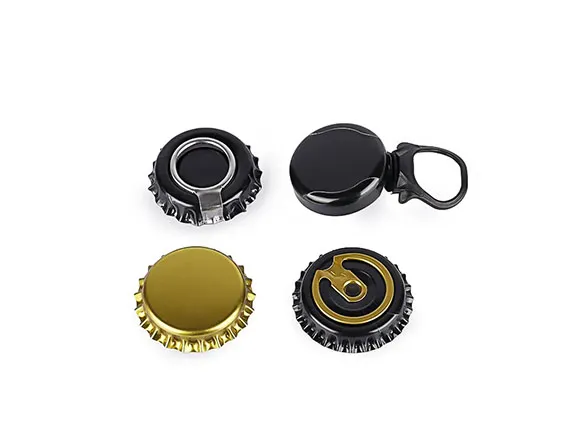
If there is a “gold standard” for the soda bottle, it is the crown cap. Invented in the late 19th century, this simple piece of circular metal with fluted edges (usually 21 teeth) remains the dominant choice for mass-market carbonated beverages.
Mechanism: These caps are crimped onto the “locking ring” of the bottle neck. The internal liner (usually made of PVC-free plastic or PE) creates an airtight seal against the glass rim.
Material: Typically tin-plated or chrome-plated steel.
Best Use: High-volume production where cost-effectiveness is key. You will see these on almost every traditional 12 oz soda bottle.
Market Dominance: Despite the rise of plastics, crown caps still hold a massive share of the global CSD (Carbonated Soft Drink) market because they are incredibly reliable under high pressure.
2. Roll-On Pilfer-Proof (ROPP) Aluminum Caps
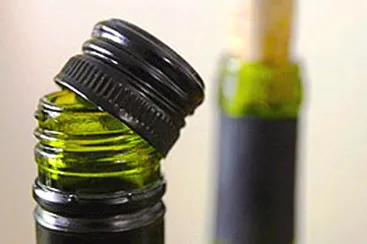
For brands that want a step up from the crown cap without losing functionality, ROPP caps are the answer. These are frequently seen on premium mixers, ginger beers, and upscale craft sodas.
The Process: Unlike pre-threaded caps, ROPP caps start as a smooth aluminum shell. As the bottle passes through the capping machine, rollers “thread” the aluminum directly onto the glass neck finish.
Features: They include a built-in tamper-evident band that breaks upon the first twist. They are also resealable, which is a major advantage for consumers who don’t finish their drink in one sitting.
Application: These are highly popular for clear glass soda bottles wholesale used in the hospitality and bar industry.
3. Plastic Screw Caps (PCO and IPEC Thread Standards)
While we often associate plastic caps with PET bottles, they are increasingly common for glass packaging, especially in regions where lightweighting is a priority.
Standards: Most plastic closures for soda follow the PCO (Plastic Closure Only) 1881 or 1810 standards, which are engineered specifically for carbonation retention of 6–8 bar.
Market Data: Statistics show that plastic closures account for over 60% of the global cap and closure revenue. Their growth in the glass segment is driven by their low cost and excellent resealability.
Compatibility: When sourcing wholesale empty glass soda bottles, you must ensure the glass neck is finished to accept plastic threads, as the tolerances are different from metal.
4. Flip-Top (Swing-Top) Ceramic and Plastic Stoppers
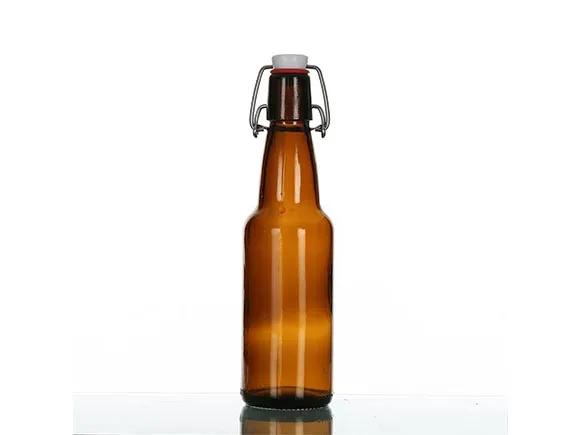
Nothing says “artisanal” like the mechanical “thunk” of a flip-top closure. Consisting of a stopper (usually ceramic or high-density plastic), a thick rubber gasket, and a wire bail, this closure is a favorite for small-batch producers.
Sustainability: These are ideal for returnable/refillable bottle systems. Because the closure stays attached to the bottle, it can be cleaned and reused many times.
Aesthetic: It provides a vintage, high-end look that justifies a premium price point.
Niche Market: While expensive and slower to apply on a filling line, they are a powerful differentiator for soda glass bottles in the craft segment.
5. Glass Stoppers
The peak of luxury packaging is the glass-on-glass closure. To maintain a seal for carbonated drinks, these stoppers are usually fitted with a discreet, transparent silicone or plastic gasket.
The Experience: It transforms a simple beverage into a gift. These are rarely used for everyday sodas but are perfect for limited-edition releases or luxury sparkling infusions.
Recyclability: Because both the bottle and the stopper are glass, it aligns perfectly with circular economy goals.
6. Specialty and Emerging Closure Solutions
The industry is currently undergoing a wave of innovation driven by regulation and environmental concerns.
Tethered Closures: Due to EU regulations (and growing global interest), we are seeing more caps designed to remain attached to the bottle after opening to prevent littering.
Liner-free Designs: New engineering allows some plastic caps to seal directly against the glass without a separate liner, simplifying the recycling process.
Smart Closures: Some high-end soda bottles wholesale now feature closures with NFC chips or QR codes printed on the inside for consumer engagement and anti-counterfeiting.
Quick Comparison of Glass Soda Bottle Closures
Closure Type | Pressure Rating | Resealable | Tamper Evidence | Cost | Best For |
Crown Cap | High | No | Yes | Low | Mass-market carbonated drinks |
ROPP Aluminum | Medium–High | Yes | Yes | Medium | Premium mixers and craft soda |
Plastic Screw Cap | High (PCO) | Yes | Yes | Low–Medium | Everyday soft drinks |
Flip-Top | Medium | Yes | Partial | Medium–High | Craft and returnable bottles |
Glass Stopper | Medium | Yes | No | High | Luxury soda packaging |
Understanding Bottle Neck Finishes and Closure Compatibility

You can have the most beautiful soda glass bottles in the world, but if the “neck finish” doesn’t match the closure, your product will leak. In the industry, the “finish” refers to the specific shape and thread pattern of the bottle opening.
What Is a Bottle Neck Finish?
The finish is measured by its outer diameter, the number of thread turns, and the presence of a locking ring. For example, a “26mm Crown” finish is standard for crown caps, whereas a “28mm PCO” is standard for many screw caps.
Continuous Thread (CT) vs. Lug Finish
Continuous Thread (CT): This is the traditional screw-top where one continuous thread wraps around the neck. It is the most common for wholesale empty glass soda bottles.
Lug Finish: Also known as “twist-off,” this uses several short, staggered threads. It is common in food jars but is also used for some non-pressurized or lightly carbonated specialty drinks.
Why Precise Matching Is Important
Mismatched tolerances lead to “leakers” or “spinners” (caps that turn but never tighten). Furthermore, the pressure of a carbonated soda can actually cause a poorly fitted cap to launch off the bottle with dangerous force. When you purchase 12 oz glass soda bottles wholesale, you should always request a technical specification sheet for the finish to share with your closure supplier.
How to Select the Right Closure for Your Glass Soda Product
Navigating the options can be overwhelming. Follow these five steps to narrow down your choice:
Step 1: Assess Your Product Profile
Is your soda highly carbonated? Does it contain real fruit juice that requires pasteurization? If you are heat-treating your bottles after filling, you need a closure and liner that can withstand “tunnel pasteurization” without losing its seal or leaching chemicals.
Step 2: Understand Your Brand Positioning
If you are selling a 99-cent soda bottle at a gas station, a crown cap is your best friend. If you are selling a $6 artisanal botanical soda at a high-end grocer, an ROPP cap or a flip-top will help signal that value to the consumer.
Step 3: Evaluate Technical Compatibility
Do you already have a capping machine? Changing closure types often requires expensive “change parts” for your production line. If you are a startup buying wholesale glass bottles for the first time, check what capping equipment is most accessible in your region.
Step 4: Factor in Sustainability Goals
Modern consumers are wary of multi-material packaging. A metal crown cap with a plastic liner is standard, but some brands are moving toward mono-material aluminum ROPP caps because they are infinitely recyclable. Consider if your target market prioritizes “plastic-free” or “reusable” options.
Step 5: Consider Consumer Convenience
If your soda is meant to be consumed on the go, a non-resealable crown cap might be a nuisance. However, for a 12 oz serving intended for immediate consumption, the tradition of the crown cap is often preferred.
Common Mistakes to Avoid When Choosing a Closure
Even experienced buyers of empty glass soda bottles wholesale make predictable errors. Here are the ones we urge you to sidestep.
Ignoring neck finish standards and thread compatibility. Just because a cap looks like it fits doesn’t mean it does. Verify the finish drawing against the cap spec.
Underestimating CO₂ pressure requirements. A flip-top good for 2.5 volumes will fail on a 4-volume soda. The failure may not happen immediately—it shows up weeks later as slow carbonation loss and retailer returns.
Over-engineering or under-engineering tamper evidence. Too little tamper evidence destroys trust. Too much—complicated bands that are hard for older consumers to break—frustrates users. Find the balance.
Neglecting liner material compatibility with acidic soda formulas. Not all liners tolerate citric acid at 3.2 pH over 12 months. Specify acid-resistant liners.
Choosing aesthetics over filling-line compatibility. A beautiful custom cap is worthless if it can’t run on your line at the needed speed. Prototype, test, measure, and test again before full production.
Partnering with the Right Glass Packaging Supplier
At the end of the day, your packaging is a system. The bottle and the closure must work in perfect harmony. Sourcing these components from different suppliers who don’t communicate is a recipe for disaster.
This is where technical expertise becomes your biggest asset. As a glass packaging manufacturer serving soda brands, distributors, and wholesalers worldwide, Roetell Glass understands that a bottle is only as good as its seal. We work closely with clients to ensure your glass soda bottles are compatible with your chosen closure system—whether you’re filling crown-cap classics or launching a new swing-top craft line.
Our team supports you from initial sampling to full-scale bulk production. We help you navigate the complexities of neck finish standards, pressure requirements, and branding needs. Whether you need 12 oz glass soda bottles wholesale or custom-shaped containers, the goal is the same: ensuring that what reaches your consumer is exactly what you intended—fresh, fizzy, and flavorful.
Conclusion
Closures play a much larger role in beverage packaging than many people realize.
For soda products, the closure affects carbonation retention, product safety, shelf appeal, production efficiency, and consumer experience. Choosing the right closure is not only a technical decision. It is also a branding and operational decision.
From crown caps and ROPP aluminum closures to swing-top systems and premium glass stoppers, every closure type offers different advantages for different markets.
For soda brands, distributors, and businesses sourcing glass soda bottles wholesale, understanding closure compatibility is essential for long-term packaging success.
As beverage packaging trends continue to evolve, demand for sustainable, resealable, and premium closure systems will continue to grow. Companies that combine strong bottle design with reliable closure performance will be better positioned to meet changing consumer expectations and market demands.
